Sir john Talbot of Grafton
(1535-1611)

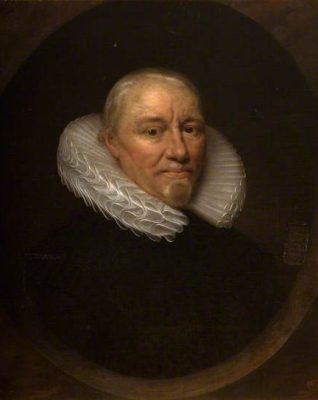
Sir John Talbot, Bart (1535-1611)
1st Cousin 14 times removed (by marriage) of Paul Borrow-Longain
*exact dates are unknown.
Sir John Talbot of Grafton, attributed to Cornelius Johnson
Sir John Talbot of Grafton and Albrighton was descended from a prominent family of Catholic landowners. His date of birth is uncertain with a range of sources suggesting anywhere between 1535 and 1545. He was the only son and heir, his father was also named Sir John Talbot of Grafton in Worcestershire and of Albrighton in Shropshire.
His mother was Sir John’s second wife, Margaret Troutbeck, of Mobberley, CheshireWhen Sir John’s father died in 1555, his heir Sir John Talbot became a ward of Sir William Petre, Secretary of State to Elizabeth I and her father Henry VIII before her. Sir William appears to have treated his ward as one of the family. In the habit of purchasing instruments for his son, also called John, Sir William’s accounts show a new lute was bought for John Talbot in February 1559
On the 18th August 1561, Katherine married Sir John Talbot of Grafton, the son of Sir John Talbot also of Grafton, Worcestershire, and of Albrighton, Shropshire who had died in 1555. As Sir William Petre’s ward, John Talbot and Katherine would have known each other for some years prior to marriage. Musicians were hired to play at Ingatestone Hall for the marriage of John Talbot to Katherine Petre, Sir Willam’s eldest daughter by his second wife, Anne Browne.Sir John Talbot was not only a landowner. He studied law and was admitted to Lincoln’s Inn. He was also the Member of Parliament for Droitwich in 1572. He was the father of four children: George Talbot, 9th Earl of Shrewsbury, a Catholic priest, John Talbot of Longford, Shropshire and two daughters Anne and Gertrude. Gertrude was notable for marrying Robert Wintour who participated in the Gunpowder Plot against James I, hatched in 1604.
Sir John Talbot was a well-known recusant which was a crime. As a Catholic who did not conform to the state’s Anglican faith he was often arrested and confined in prisons or placed in custody of notable personages. In August 1580 he was arrested after being spotted with a Shropshire-bornCatholic priest in Smithfield, London. A man named Sledd informed on Sir John and the priest, Blessed Robert Johnson. Whilst the accusation was that the priest was Sir John Talbot’s priest, Fr. Johnson was believed by some to be Katherine’s priest. Fr. Johnson was also arrested, subjected to inquisition and tortured. He was sentenced to a grisly death in 1582 with two other
priests. All three priests were beatified as martyrs in the 1880s.
After being informed on, Sir John Talbot was placed in the custody of the Dean of Westminster in August 1580. Shortly afterwards he was taken to Aldersgate, London to be kept at the house of his brother-in-law, Sir John Petre where he remained for more than a year. In October 1581, he was moved to another house outside London on account of an outbreak of the plague in the city.
His confinements for recusancy continued throughout the 1580s. He was imprisoned in Wisbech Castle for six months for illegally hearing Mass. He was bailed in May 1589 due to his wife’s poor health and his own but he was restricted to his own house in Clerkenwell, London. This pattern continued throughout the early 1590s, in 1593 he was imprisoned in Ely gaol.
Sir John’s health continued to suffer. He was released to take ‘the Bathes’ to improve his health but was fined £120 for recusancy after his release from Ely. He spent yet more time in prison, this time in Banbury Castle. He was bailed for two months in 1596, perhaps linked to the death of his wife Katherine in February 1596. His bail period was then extended twice in 1597 during which time the widower Sir John married Margaret Windsor from a landed Worcestershire family.
By 1601, Sir John had returned home to live in Worcestershire, but he was still paying monthly fines of £20 for recusancy. At the end of 1604, he received £160 from the Crown, payable to him under warrant for recusancy fines. This was as a result of a pardon gained for him by Sir William Anstruther.
In 1605 he was arrested and examined again. This time he was suspected of complicity in the Gunpowder Plot. His son-in-law Robert Wintour who had married his daughter Gertrude was already implicated but had sworn that his father-in-law knew nothing of the matter. Sir John was eventually cleared. Fines for his recusancy continued in 1606 and in September the value of these was granted to Lord Hay.
It is uncertain exactly when Sir John Talbot died. Dates given from various sources range from 1607 to 1611.
